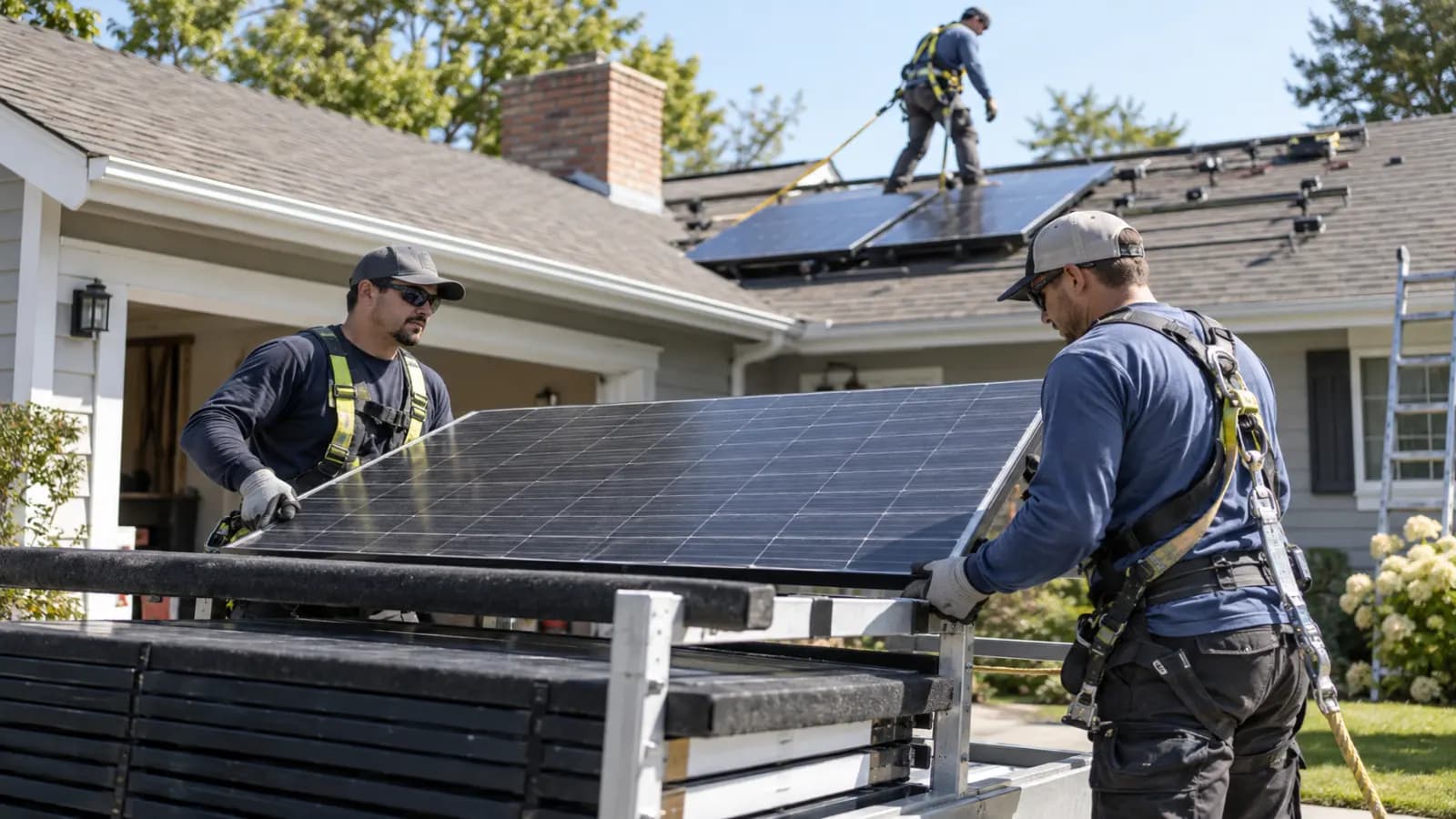
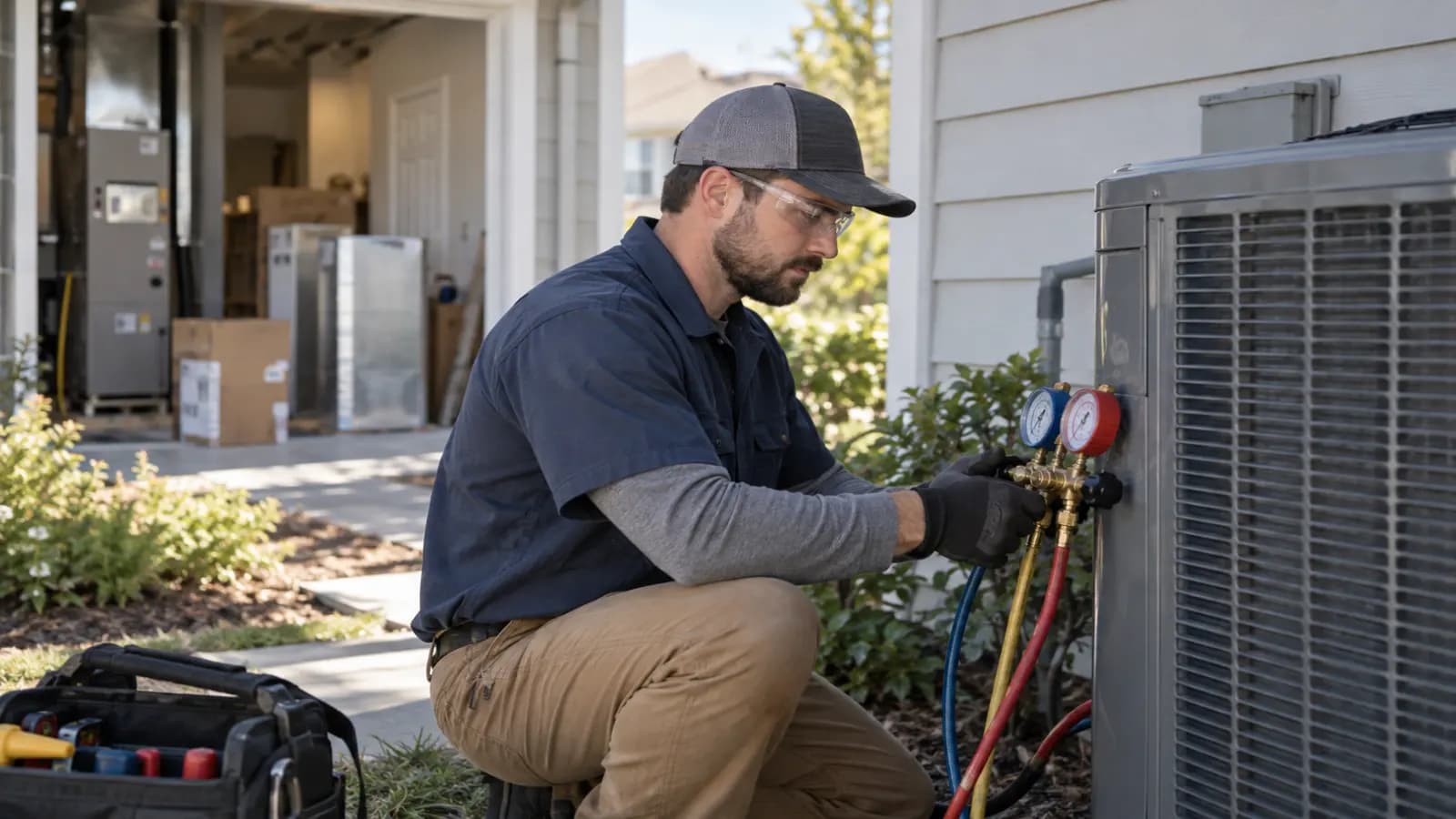
A full HVAC replacement can be a straightforward equipment swap or a redesign involving ducts, electrical work, and a new heating strategy. Here is how to price the actual scope—not just the boxes.
Looking for verified hvac specialists? Check availability in seconds.
Check ZIP code availabilityHow much does HVAC replacement cost in 2026?
For planning purposes, a residential HVAC replacement in the United States commonly falls between $5,000 and $22,000 in current 2026 cost data. A typical matched furnace-and-air-conditioner or ducted heat-pump changeout with usable ductwork often lands in the middle of that range. Premium variable-capacity equipment, difficult attic access, major duct corrections, or electrical upgrades can move the total well above it.
The useful number is the installed price for a correctly sized, commissioned system—not the advertised equipment price. Your written scope should account for removal, permits, matched indoor and outdoor components, required electrical and drain work, startup testing, and warranties. If a quote leaves those items vague, its total is not ready to compare.
These figures are national research estimates, not quotes or guarantees. Labor rates, climate requirements, equipment availability, and local codes vary substantially by ZIP code. Use the ranges below to screen bids, then rely on an onsite load calculation and itemized proposals for your home.
What contractors mean by ‘HVAC replacement’
Two contractors can use the same phrase and price different jobs. A changeout usually reuses serviceable ducts and replaces the main equipment. A full system replacement may also correct airflow, replace a line set, modify gas venting, add a return, upgrade controls, or change the home from a furnace-and-AC combination to a heat pump.
Ask each bidder to label the scope in plain English. The following categories are useful national planning ranges for standard residential work; brands, capacity, and installation conditions can shift them.
- Central air conditioner only: roughly $5,000–$14,000 installed when the furnace or air handler and ducts remain compatible.
- Gas furnace only: roughly $5,000–$9,000 for many standard replacements; high-efficiency venting or difficult access can add cost.
- Ducted air-source heat pump: roughly $7,000–$16,000 for many replacements, with cold-climate and variable-capacity systems often higher.
- Matched furnace plus central air conditioner: commonly about $7,000–$15,000 with usable ductwork, though complex or premium installations can exceed $20,000.
- New or substantially replaced ductwork: often adds several thousand dollars and can turn a one- or two-day changeout into a larger project.
The six factors that move your final price
Capacity comes first. A contractor should calculate the home’s heating and cooling load using Manual J or an equivalent method. Square footage and the old unit’s nameplate are not enough because insulation, windows, air leakage, orientation, occupancy, and climate all affect the load. ENERGY STAR warns that oversized equipment can cycle too often, reduce comfort, and shorten equipment life.
Efficiency and staging come next. Single-stage equipment generally costs less upfront. Two-stage and variable-capacity systems can improve temperature control, humidity removal, and noise, but the operating savings depend on climate, utility rates, runtime, and installation quality. Ask for a modeled annual operating-cost comparison rather than accepting a generic payback claim.
- System type and fuel: furnace plus AC, all-electric heat pump, dual-fuel, ductless, or geothermal systems have different equipment and infrastructure needs.
- Duct condition: leakage, crushed flex duct, undersized returns, poor insulation, and inaccessible runs can add legitimate corrective work.
- Electrical and fuel scope: a new disconnect, circuit, service capacity, condensate pump, gas piping, venting, or chimney liner may be required.
- Access and removal: tight attics, crawlspaces, rooftops, asbestos-containing materials, and crane work increase labor and may require specialty contractors.
- Permits and commissioning: permit fees vary, but inspection, airflow verification, refrigerant charging, drainage testing, and combustion testing should not be treated as optional extras.
- Local market and timing: contractor availability, regional wages, climate-specific equipment, and emergency scheduling affect bids more than a national average can show.
A realistic quote example
Consider a 1,900-square-foot home replacing an older three-ton central AC and gas furnace. The ducts are mostly sound, but testing finds a restricted return and leakage at the air handler. A complete mid-tier proposal might include matched indoor and outdoor equipment, removal and disposal, a new pad and disconnect, return-air correction, duct sealing near the equipment, thermostat, permit, startup measurements, and labor warranty.
A cheaper proposal may omit the return correction, permit, or model numbers. A more expensive proposal may use variable-capacity equipment, include a longer labor warranty, and repair more ductwork. The totals do not reveal which offer is better until you normalize those differences. Build a simple worksheet with one row per scope item and one column per contractor.
Do not let a monthly payment replace the cash price. Record the installed total, financing term, interest rate, fees, prepayment rules, and total of payments. A comfortable monthly number can hide a large financing premium.
How to compare HVAC quotes fairly
Request at least three onsite proposals when time and safety allow. Give every contractor the same comfort complaints and project goals, then ask for the following items in writing.
Exact manufacturer and model numbers for the outdoor unit, indoor coil, furnace or air handler, thermostat, and major accessories.
The design heating and cooling loads and the calculation used to select capacity—not simply ‘same size as existing.’
An AHRI certificate or reference number showing that the indoor and outdoor components form a rated match.
The duct inspection findings, leakage or static-pressure measurements when applicable, and every proposed duct modification.
Permit, inspection, equipment removal, disposal, refrigerant recovery, electrical work, drain work, startup, and cleanup shown as included or excluded.
Manufacturer parts warranty, contractor labor warranty, registration responsibility, maintenance conditions, and exclusions stated separately.
Deposit, progress payments, financing terms, change-order process, estimated schedule, and who pays if inspection requires a correction.
Repair or replace your existing system?
Age alone does not settle the decision. Compare the immediate repair, the likelihood of another major failure, comfort problems, energy use, remaining warranty, and the installed replacement price. A modest repair on a younger system with a healthy compressor or heat exchanger often deserves approval. A major repair on an aging system with recurring leaks, unavailable parts, or chronic airflow problems deserves a replacement comparison.
For an R-22 air conditioner, ask whether the quote repairs the leak or merely adds refrigerant. R-22 production and import ended in the United States in 2020, although reclaimed material may still be used. Repeated leak-and-recharge visits can make replacement more sensible, but a technician should diagnose the failure before recommending either path.
Also ask whether replacing only the failed outdoor unit would create an unmatched system. An indoor coil and outdoor condenser that are not rated together may not deliver the published efficiency or capacity. The least expensive component swap can become expensive if it compromises performance or warranty coverage.
Rebates, tax credits, and 2026 financing
Do not subtract a federal tax credit from a 2026 proposal unless a qualified tax professional confirms eligibility. The IRS states that the Energy Efficient Home Improvement Credit is not available for property placed in service after December 31, 2025. Some state, local, manufacturer, and utility rebates may still be available, and income-qualified home energy programs differ by state.
Ask the contractor to identify each incentive by program name and provide the eligibility link. Confirm whether the quoted price is before or after the rebate, who files the paperwork, what happens if funding is exhausted, and whether financing charges erase part of the savings. Treat an unverified ‘up to’ rebate as zero when comparing bids.
The bottom line
The best HVAC replacement quote is not automatically the lowest or the one with the highest efficiency label. It is the proposal that sizes the equipment for your house, corrects the airflow problems that would undermine it, identifies every included component, and documents how the finished system will be tested.
Before signing, compare three normalized scopes and check contractor licensing and insurance through your state or local authority. If you want help finding available HVAC professionals, submit your ZIP code and project details to request a free match with independent local providers. There is no obligation to hire through GetLocalExperts.
Frequently asked questions
How much should a new HVAC system cost for a 2,000-square-foot house?
Many standard ducted replacements for a home near 2,000 square feet fall around $7,000–$15,000, but square footage cannot determine the equipment size or final price by itself. Climate, insulation, windows, air leakage, ducts, fuel type, access, and local labor all matter. Require an onsite load calculation before selecting capacity.
Is it cheaper to replace the furnace and AC at the same time?
It can be. A combined project may avoid duplicated labor and helps ensure that the furnace or air handler, indoor coil, and outdoor unit are compatible. Replacing both is not automatically necessary, though. Ask for separate and combined scopes, remaining equipment life, and the AHRI-rated match before deciding.
Does homeowners insurance cover HVAC replacement?
Homeowners insurance generally does not pay for wear, age, or mechanical breakdown. It may cover damage caused by a covered event, depending on the policy and exclusions. Review the cause of loss and speak with your insurer before authorizing non-emergency disposal of damaged equipment.
How long does an HVAC replacement take?
A straightforward residential changeout often takes one day, while duct modifications, electrical upgrades, fuel conversion, difficult access, or multiple systems can require several days. Permit and inspection scheduling may extend the calendar even when installation work is complete.
Should I choose the highest SEER2 rating I can afford?
Not automatically. Compare installed cost, modeled energy use, climate, utility rates, comfort features, warranty, and expected ownership period. Proper sizing, airflow, refrigerant charge, and duct performance can matter more than buying a premium rating that is poorly installed.
Cost ranges here are general research estimates compiled from national and regional data. They are not quotes, offers or price guarantees — only a licensed provider who has seen the job can price it. GetLocalExperts is a free matching service and does not perform home services.
Sources and further reading
- HVAC Replacement Cost: 2026 Data — Angi
- HVAC Quality Installation — ENERGY STAR
- 10 Tips for Hiring a Heating and Cooling Contractor — ENERGY STAR
- Hire a Professional Contractor for Duct Improvement Projects — ENERGY STAR
- Energy Efficient Home Improvement Credit — Internal Revenue Service
- AHRI Certification Directory — Air-Conditioning, Heating, and Refrigeration Institute
This guide was researched and reviewed by the GetLocalExperts Editorial Team against primary regulatory benchmarks, state contractor licensing board standards, and FTC consumer protection guidelines.