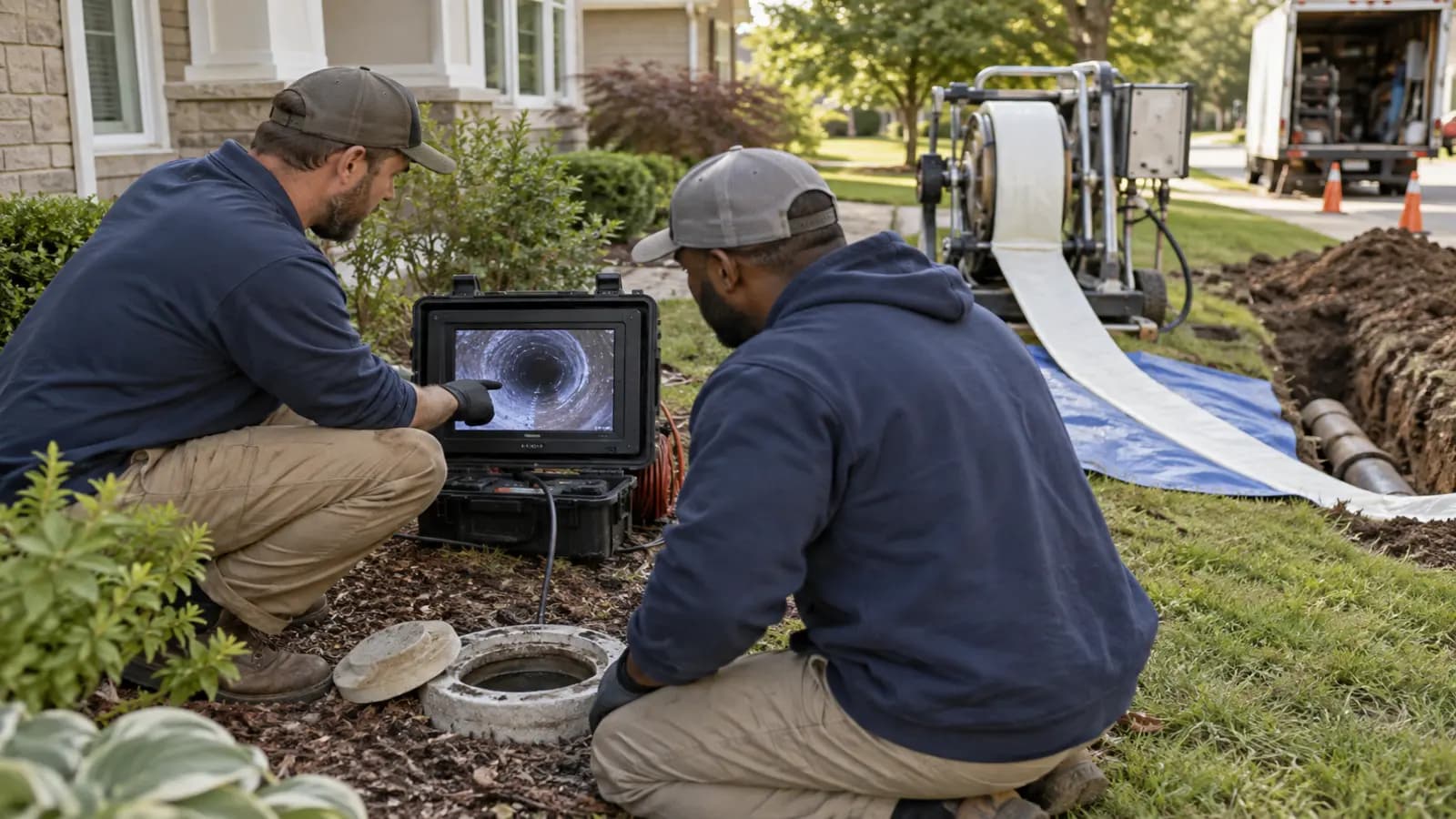
A camera image is evidence, not a complete diagnosis. Compare cleaning, spot repair, lining, bursting and excavation only after locating the failure and defining pipe ownership.
Looking for verified plumbing specialists? Check availability in seconds.
Check ZIP code availabilityRepair and replacement cost ranges
Current Angi data places many sewer repairs around $1,100–$4,100, with camera inspections often several hundred dollars. Full replacement is frequently priced by linear foot and can rise sharply with depth, access and surface restoration.
A quote should separate diagnosis, pipe work, permits, excavation, traffic control, cleanup and restoration. A low pipe price may exclude the driveway, landscaping or interior damage.
Diagnose before choosing a method
A camera inspection should identify the defect and record distance from an access point. Ask for the full video, locator marks and a written interpretation—not one selected image.
Cleaning may resolve roots or buildup temporarily but does not rebuild a collapsed pipe. Standing water can obscure defects, so cleaning and a second camera pass may be necessary.
Spot repair, lining, bursting or excavation
A spot repair can be appropriate for one accessible failure with otherwise serviceable pipe. Cured-in-place lining may renew suitable pipe with fewer excavations, but it cannot correct every collapse, severe offset or missing section.
Pipe bursting replaces an existing run while limiting trench length. Open excavation remains necessary when alignment, depth, utilities or pipe condition prevent trenchless methods.
Confirm ownership and permits
Responsibility can change at the property line, cleanout, curb or utility connection. Ask the municipality or sewer authority which segment the homeowner owns.
Require utility locating and applicable permits before excavation. Easements, neighboring property and public right-of-way work can add approvals.
A fair quote checklist
Give each bidder the same inspection evidence and ask for alternatives.
Defect type, material, depth, length and exact location.
Why the proposed method is suitable and what would disqualify it.
Pipe size, material, cleanouts and connection details.
Permits, inspections, utility locating and bypass pumping.
Landscape, concrete, flooring and drywall restoration.
Workmanship warranty and post-work camera verification.
Respond safely to a backup
Stop using fixtures that add wastewater and keep people and pets away from contaminated areas. Flood or sewage water can carry biological and chemical hazards.
Document damage and contact the appropriate plumber, restoration provider and insurer. Do not run HVAC equipment if contaminated air or materials could be distributed.
The bottom line
The best decision starts with a located defect and full-scope comparison. Choose the least invasive method that actually addresses the pipe condition—not the method with the strongest sales pitch.
Verify contractor licensing, insurance and local permit responsibility before signing.
Frequently asked questions
Is trenchless sewer repair always better?
No. It can reduce excavation, but pipe condition, alignment, connections and access determine suitability.
Does a sewer camera find every leak?
A camera shows visible interior conditions but may not prove leakage or structural soil conditions. Additional testing may be needed.
Who owns the sewer lateral?
Local rules differ. Ask the municipal utility where public responsibility ends and retain the written answer.
Does homeowners insurance cover sewer replacement?
Coverage depends on cause, policy exclusions and endorsements. Wear and maintenance are often treated differently from sudden covered damage.
Should roots be cleaned before repair?
Often the line must be cleaned for a useful inspection, but cleaning alone does not correct broken or displaced pipe.
Costs are broad research estimates, not quotes. Pipe ownership, permits, site conditions and repair suitability vary. Sewage exposure can present health hazards.
Sources and further reading
- Sewer Line Replacement or Repair Costs — Angi
- Preparing for and Responding to Natural Disasters — U.S. Environmental Protection Agency
This guide was researched and reviewed by the GetLocalExperts Editorial Team against primary regulatory benchmarks, state contractor licensing board standards, and FTC consumer protection guidelines.