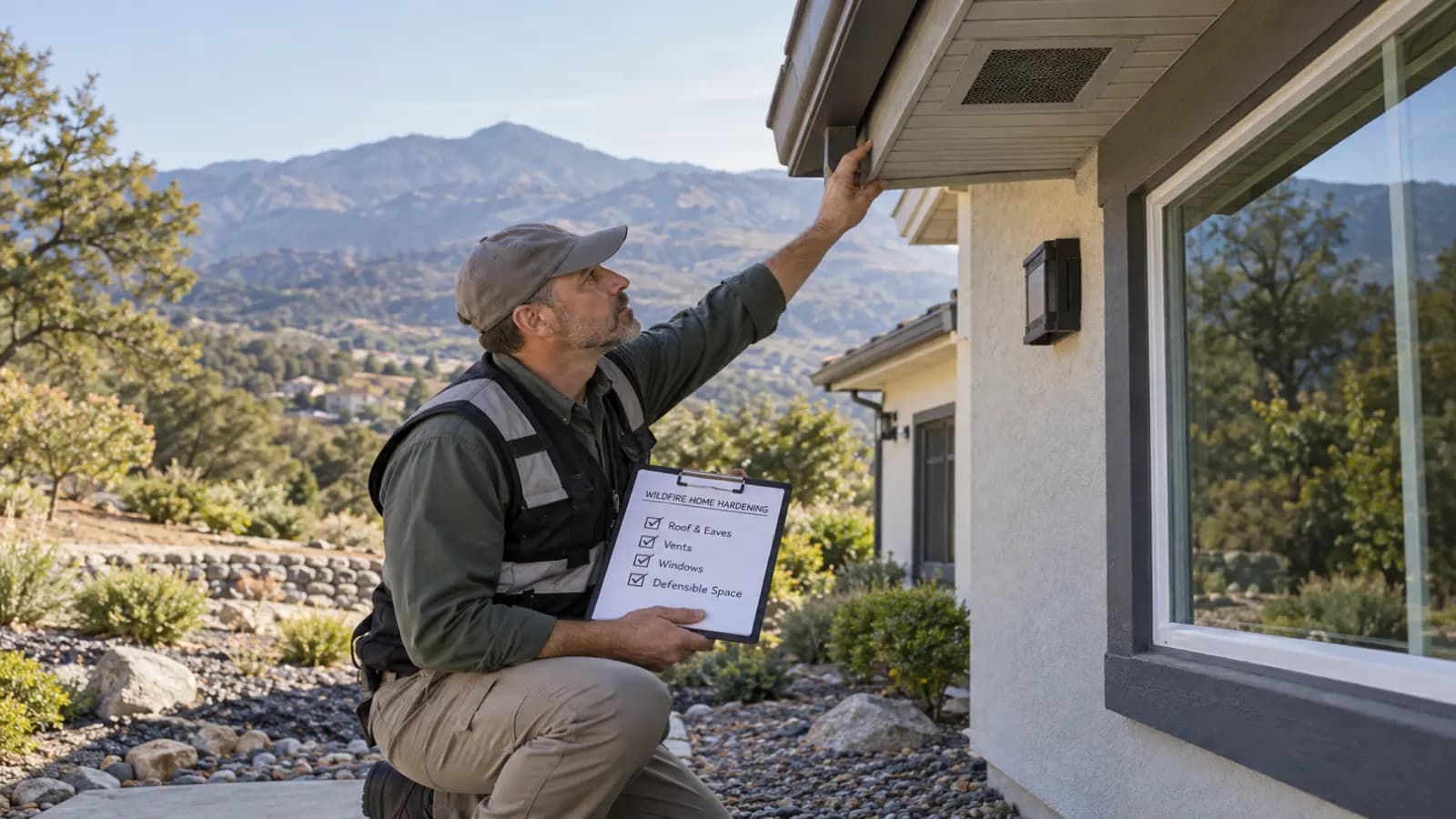
Home hardening focuses on how embers and heat reach the structure. Prioritize the roof edge, vents, openings and the area immediately around the home before buying cosmetic upgrades.
Looking for verified roofing specialists? Check availability in seconds.
Check ZIP code availabilityStart with an exposure-focused assessment
Wildfire hardening is not one product. An assessment should consider embers, radiant heat, flame contact, wind, neighboring structures, slopes and combustible items near the building.
Use current local fire authority and building-code guidance because approved materials and required details vary by jurisdiction.
Roof and roof-edge priorities
FEMA identifies roofs as especially vulnerable to windborne embers. Repair gaps, damaged covering and flashing, and keep roof surfaces and gutters free of combustible debris.
When reroofing, ask for the complete assembly: covering classification, underlayment, edge details, valleys, vents and transitions—not just the shingle or panel brand.
Vents and openings
Attic, soffit, gable, crawlspace and roof vents can admit embers. FEMA guidance discusses corrosion-resistant metal screening and ember-resistant configurations, while warning that details and maintenance matter.
Do not block required ventilation without a building-science plan. Ask a qualified professional to balance ember resistance, moisture control and code.
Windows, siding, decks and fences
Window size, glazing, frame and nearby fuels affect vulnerability. Exterior walls, decks and fences can create paths for fire toward the structure.
Coordinate replacements so gaps, joints and transitions do not undermine otherwise resistant materials. Removing combustibles near windows may be as important as replacing the window.
Contractor quote checklist
Require product and installation details tied to identified vulnerabilities.
Existing-condition photos and prioritized risks.
Product classification and local approval documentation.
Vent, flashing, edge and penetration details.
Deck, fence and wall transition treatment.
Permit and inspection responsibility.
Maintenance requirements and excluded landscaping work.
Sequence the work by risk and opportunity
Begin with routine debris removal and obvious openings, then coordinate larger improvements with normal roof, window or siding replacement cycles. Local grants or insurer programs may have specific inspection rules.
Preserve photos, permits and product documentation for future maintenance, insurance conversations and resale.
The bottom line
A useful plan connects building components with the immediate surroundings. Prioritize ember entry and combustible pathways rather than purchasing isolated products.
Verify local requirements with fire and building authorities and confirm contractor credentials before work.
Frequently asked questions
Can home hardening make a house wildfire-proof?
No. It can reduce vulnerabilities but cannot eliminate risk under every fire condition.
Are metal roofs automatically wildfire-safe?
The covering is only part of the assembly. Edges, underlayment, gaps, vents and debris also matter.
Should attic vents be sealed permanently?
Not without professional guidance. Ventilation and moisture requirements must be maintained while reducing ember entry.
Do replacement windows reduce wildfire risk?
Appropriate glazing and frames can help, but window size, installation and nearby combustible materials remain important.
Who should inspect a home for wildfire upgrades?
Start with qualified local fire-safety or mitigation resources, then use appropriately licensed contractors for the identified building work.
No improvement makes a home wildfire-proof. Requirements and effective measures vary by hazard, building, jurisdiction and current fire guidance.
Sources and further reading
- Homeowner's Guide to Reducing Risk of Structure Ignition From Wildfire — Federal Emergency Management Agency
- Home Builder's Guide to Construction in Wildfire Zones: Vents — Federal Emergency Management Agency
This guide was researched and reviewed by the GetLocalExperts Editorial Team against primary regulatory benchmarks, state contractor licensing board standards, and FTC consumer protection guidelines.